1 month ago
33
1 month ago
33

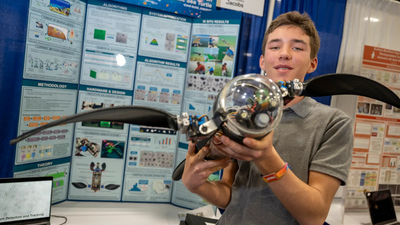
At just 16 years old, Canadian student Evan Budz has developed an autonomous AI-powered robot turtle that could help scientists tackle one of the world's fastest-growing environmental problems: microplastic pollution.
Inspired by the graceful swimming of a snapping turtle he encountered during a family camping trip, Budz spent nearly 4,000 hours designing and refining a robotic turtle equipped with an underwater 3D holographic imaging system and artificial intelligence. His invention can detect microplastics directly in water with a reported 94% accuracy, earning him the prestigious Gordon E. Moore Award and a US$50,000 scholarship at the 2026 Regeneron International Science and Engineering Fair (ISEF).
How Evan Budz built an AI-powered robot turtle to detect microplastics
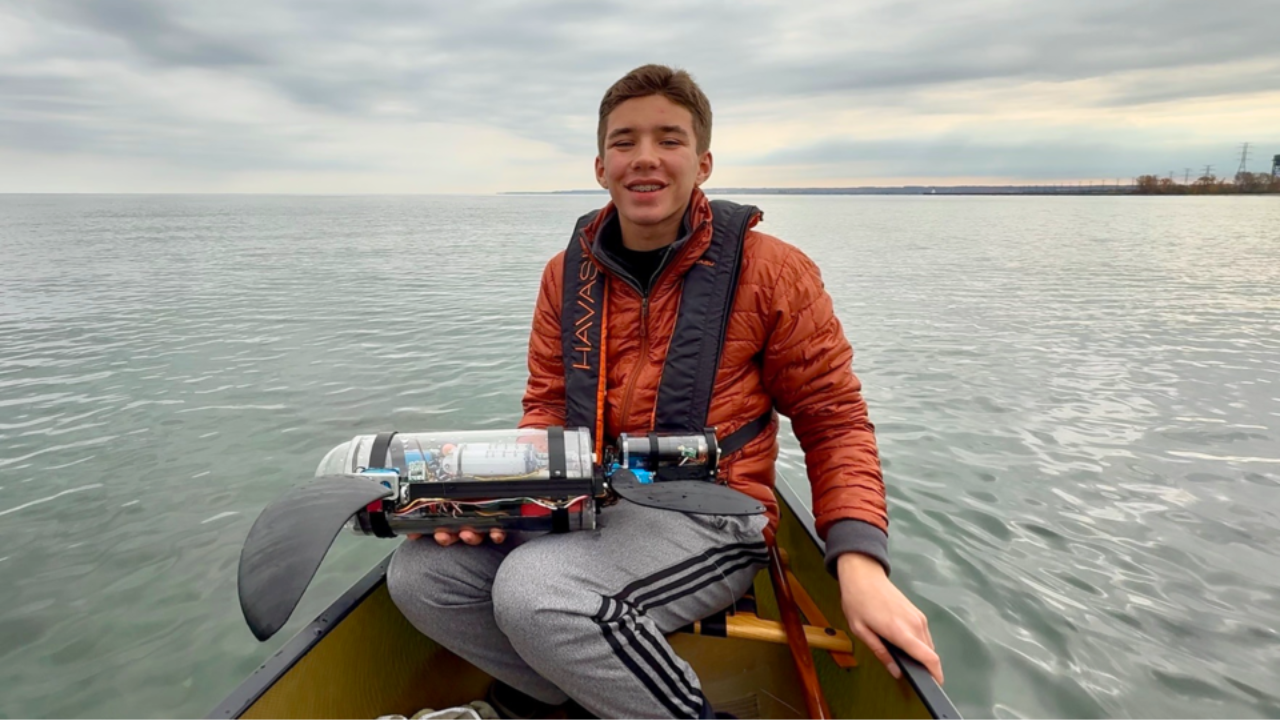
Evan Budz's journey began during a family camping trip in Ontario's backcountry in 2024, where he watched a snapping turtle glide effortlessly through the water. Fascinated by its smooth and energy-efficient movement, the 16-year-old decided to recreate the animal's swimming ability using robotics. He spent around five months building the turtle-shaped robot before dedicating another year to developing an underwater 3D holographic imaging system and training artificial intelligence models capable of recognising microplastics.
Altogether, Budz invested nearly 4,000 hours into the project, turning an idea inspired by nature into an award-winning environmental innovation.
Who is Evan Budz?
Evan Budz is a Canadian high school student with a passion for engineering, artificial intelligence and environmental conservation. Since childhood, he has enjoyed exploring lakes and forests during camping trips with his family, which sparked his interest in freshwater ecosystems.
Over time, he became increasingly concerned about plastic pollution and decided to apply his skills in robotics to help scientists monitor one of the world's most persistent environmental threats.His work gained international recognition after he won one of the top prizes at the 2026 Regeneron International Science and Engineering Fair, one of the world's largest and most prestigious science competitions for high school students.
Why did he choose a turtle for his robot?
Rather than designing a conventional underwater drone, Budz modelled his invention on a turtle because of its natural swimming efficiency. Turtles can travel long distances while using relatively little energy, making them ideal for extended underwater missions.Another advantage is that turtles are common in many freshwater and marine environments. A turtle-shaped robot is less likely to disturb wildlife than a noisy mechanical vehicle.
Their broad shell also provides enough space to carry scientific instruments such as cameras, sensors and onboard computers.
How does the AI-powered robot turtle work?
The robot is an autonomous underwater vehicle capable of navigating without manual control. It follows pre-programmed search patterns while onboard algorithms regulate buoyancy, maintain depth and ensure stable movement through the water.Mounted on top of the robot is a custom-built 3D holographic imaging system.
Instead of capturing ordinary photographs, it records three-dimensional holograms of tiny particles suspended in water. These images are then analysed by AI models trained by Budz to distinguish microplastics from natural particles and microscopic aquatic organisms.
How does the robot detect microplastics?
The AI-powered system can identify plastic particles as small as 10 microns, significantly thinner than a human hair. After capturing holographic images, the machine-learning models classify the particles based on their physical characteristics.By the time Budz presented the project at the 2026 Regeneron International Science and Engineering Fair, the system had achieved a reported 94% accuracy in distinguishing microplastics from other microscopic particles, demonstrating its potential as a practical environmental monitoring tool.
Why are microplastics a growing global problem?
Microplastics are tiny fragments of plastic measuring less than five millimetres in diameter. They originate from broken plastic waste, synthetic textiles, cosmetics and industrial products.
Because they are so small, they can spread throughout rivers, lakes and oceans and are extremely difficult to remove.According to Ocean Conservancy, around 11 million metric tonnes of plastic waste enter the oceans every year, affecting more than 1,300 marine species. Scientists have also detected microplastics in drinking water, seafood, soil and even the human body, increasing concerns about their long-term environmental and health effects.
What challenges did Budz overcome?
The road to success involved numerous setbacks. During the earliest tests in his grandparents' swimming pool, the robot repeatedly sank instead of swimming. Budz recalled that it behaved "like a brick" because it could not regulate its depth or maintain buoyancy.Months of redesign followed as he refined the propulsion system, adjusted the robot's balance and improved its autonomous navigation software. He also consulted experts at a local aquarium to better understand turtle movement and replicate it as accurately as possible.
Why could this technology change environmental monitoring?
Traditional methods of detecting microplastics usually require scientists to collect water samples and send them to specialised laboratories for analysis. This process can take several days and often involves expensive equipment and highly trained technicians.Budz's robot offers a different approach by analysing water directly where it is collected. Such technology could enable faster and more affordable monitoring in remote lakes, rivers and coastal regions where laboratory facilities are unavailable.
Awards won by the invention
In May 2026, Budz received the Gordon E. Moore Award for Positive Outcomes for Future Generations at the Regeneron International Science and Engineering Fair. The honour included a US$50,000 scholarship in recognition of research with the potential to create meaningful benefits for society.The annual competition, organised by Society for Science and Regeneron Pharmaceuticals, brought together more than 1,700 students from around the world and awarded over US$7 million in scholarships and prizes.
The future Evan Budz innovation
Budz plans to pursue higher education in science or engineering while continuing to improve his technology. He hopes his research will inspire further innovations in environmental monitoring and contribute to the global effort to tackle plastic pollution.Although the AI-powered robot turtle is currently a research prototype, it demonstrates how robotics, artificial intelligence and biomimicry can work together to solve real-world problems. Budz's achievement also highlights the remarkable impact young innovators can have on some of the world's most pressing environmental challenges.