1 hour ago
1
1 hour ago
1

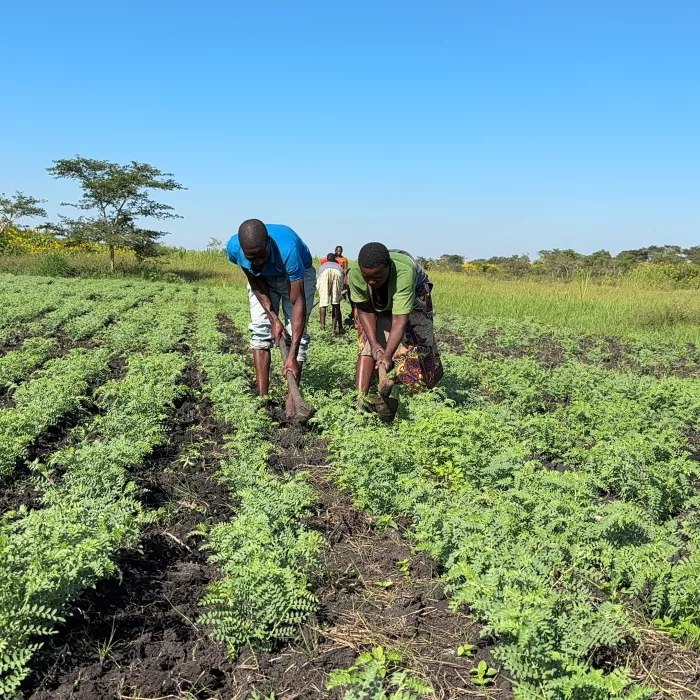 Chickpea farmers in Malawi where the new variety is being piloted. Picture supplied.
BULAWAYO, Zimbabwe , August 5 (IPS) - New chickpea seed research and production have become the new frontier of climate resilience in southern Africa as farmers battle failing cereal production.
Farmers in Zambia, Malawi and Mozambique are benefiting from a new chickpea variety which researchers say requires lower nitrogen fertiliser at a time such agriculture inputs have become the latest victim of global trade disruptions that are driving production costs.
The variety, high in its nutritional value, is also boosting farmer incomes while also driving exports, researchers say.
For a long time African farmers have struggled with both poor yields and low-nutrition crops amid concerns of stunted growth, especially among children.
These agriculture science interventions come at a time of concerns about how best the Global South, affected by climate change, can navigate what has increasingly become the complex nature of food production.
The International Crops Research Institute for the Semi-Arid Tropics (ICRISAT), with support from the Food and Agriculture Organization of the United Nations (FAO) through the Benefit-Sharing Fund (BSF) of the International Treaty on Plant Genetic Resources for Food and Agriculture (ITPGRFA), is driving the efforts to “reduce dependency on costly agricultural inputs”.
According to a recent ICRISAT briefing, “The initiative is particularly relevant at a time when geopolitical instability, fertiliser supply disruptions, and rising production costs are affecting vulnerable dryland farming systems across Southern Africa.”
As a result of the disruption of global food distribution networks, prices of basic commodities have soared in Africa as governments scramble to boost both production and farmer incomes, while international finance institutions continue to urge governments to do away with agriculture subsidies.
“With fertiliser prices and agricultural production costs continuing to rise globally, resilient legume crops such as chickpeas are becoming increasingly important in helping farmers across Malawi and Southern Africa maintain productivity, strengthen food security, and reduce dependence on costly agricultural inputs,” said Dr Himanshu Pathak, ICRISAT director general.
Several southern African countries have experienced a series of climate and economic pressures, highlighting the urgency of strengthening resilience, ICRISAT researchers say.
According to the Famine Early Warning System Network, countries such as Zimbabwe will also face cereal deficits in low-rainfall regions up to the beginning of 2027, further highlighting the urgency of new drought-resistant varieties.
While developed countries have for years pledged to support poorer countries in dealing with the impact of climate change on food production, researchers say little has emerged to address Africa’s historic food insecurity.
According to the latest ICRISAT research, “chickpea requires lower nitrogen fertiliser inputs, making it an attractive option for farmers facing rising production costs and climate pressures.”
“Notably adapted to the semi-arid tropics, chickpea exhibits remarkable resilience in harsh environmental conditions, including heat and drought,” notes an ICRISAT update.
“Its high nutritional content, long shelf life, and culinary versatility make it a favourite ingredient in various traditional and modern dishes, further cementing its role in global diets,” the agency adds in a briefing charting the benefits of the chickpea variety.
“Across many dryland regions, farmers are facing rising production costs, declining soil fertility, and increasingly unpredictable weather patterns,” said Dr James Mwololo, a scientist leading the ICRISAT legume breeding project.
“Chickpea is emerging as a strategic crop for dryland agriculture because it offers farmers a viable pathway to maintain productivity and incomes under increasingly difficult growing conditions,” said Mwololo, who is also the project’s principal investigator.
Chickpea yields remain low in Malawi, with farmers harvesting a little over 800 kilograms per hectare last year “despite improved varieties having the potential to produce up to 3 tonnes per hectare,” Mwololo added.
“With greater access to quality seed, national production is expected to increase more than threefold from the 2022 baseline of 2,570 metric tonnes, while the number of farming households reached could expand from 22,000 to more than 66,000 by 2027,” Mwololo said.
These science-based interventions have been welcomed by farmer representatives, who say they see market opportunities for the new chickpea variety that ICRISAT says will improve incomes at the household level.
“Our partnership with ICRISAT goes beyond traditional improved seed development,” said Gloria Pekani, chief executive officer of Milele Agro-processors in Malawi.
“It is also about creating both stronger market opportunities and supporting livelihoods for farmers, processors, and communities that increasingly depend on resilient crops such as chickpea,” Pekani said.
Malawi is considered one of the poorest countries in the world, where nutrition concerns persist, and is among several countries where agro-science is touted as a long-term panacea for food insecurity.
In countries such as Sudan, the Food and Agriculture Organisation (FAO) says cereal production is at an all-time low because of the “ongoing conflict, rising agricultural inputs costs and disruptions to livelihoods and markets, further exacerbating food insecurity across the country”.
The new chickpea research is expected to address these concerns across the African continent, where countries such as Mozambique, where the research is being piloted, face the same civil conflict challenges as Sudan that have disrupted rural agricultural activities.
IPS UN Bureau Report
© Inter Press Service (20260805091707) — All Rights Reserved. Original source: Inter Press Service