1 month ago
21
1 month ago
21

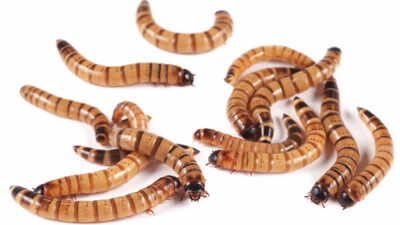
Superworms, the larvae of Zophobas morio, are often used as animal feed
Scientists tested pet-store 'superworms' on animal specimens and found the beetle larvae can clean skeletons for museums without harsh chemicals or bone damage.A common insect larva found in local pet shops is offering museums a safe, cheap, and gentle way to clean animal bones for research and display.According to a study published in the journal PLOS One, researchers at Ferdowsi University of Mashhad in Iran tested superworms—the larvae of the Zophobas morio beetle—to strip flesh from dead animals. The team found that these large larvae can pick bones completely clean without using harmful chemicals or causing damage to delicate bone structures.
Overcoming museum space limits and specimen damage
The research began when the natural history museum at Ferdowsi University in Mashhad started running out of freezer space due to a steady flow of donated roadkill and injured birds."We don't have enough freezers to put these dead animals," said Niloofar Alaei Kakhki, a bioinformatician who worked on the study and is now based at the State Museum of Natural History in Stuttgart, Germany. "We have to find a way to clean them."Museums typically prepare skeletons using chemical treatments, boiling, or dermestid beetles, but each traditional option has drawbacks. Chemical treatments can damage bone material and harm the environment.
Boiling takes a lot of time and risks breaking fragile bones.While dermestid beetles are widely used, they pose a constant threat to museum collections. If they escape, "it could be really dangerous for the museum collection," Alaei noted, because they chew through feathers, dried skin, and preserved specimens.
Why superworms offer a safer alternative
Native to Central and South America, superworms grow to nearly the size of a human finger and have large chewing mandibles.
Although sold globally as live pet food, their biology makes them uniquely suited for museum work.Superworms only transform into adult beetles when isolated individually. When kept together in group containers, they remain permanently in their larval state, preventing them from breeding, flying, or escaping to damage other exhibits."You can reuse the same larvae for almost six months," Alaei said.The worms work fast, yet they're "super gentle," she added.During tests, researchers exposed superworms to a wide range of dead animals, including fish, mice, small birds, wolves, and wild cats. The team pre-cleaned the specimens slightly and softened them in hot water for a few minutes before introducing the larvae.The tests proved successful across various specimen sizes. Alaei said the worms did a remarkable job with no apparent side effects, even cleaning "the ribs of the fish, which is super, super tiny."The researchers found that using 10 to 15 larvae per specimen worked best, stripping flesh quickly without risking damage to tiny bones.
Outside experts weigh in on the technique
Given their commercial availability, Alaei hopes superworms will give smaller museums and facilities with limited budgets a practical new tool for specimen preparation."This study is adding one more possibility when you need to clean something," said Damien Charabidze, a forensic entomologist at the University of Lille in France who was not involved in the study.Charabidze noted that while superworms are easier to contain than dermestid beetles, their strong mandibles might accidentally break very fragile bones. He also pointed out that superworms naturally prefer a vegetarian diet, meaning animal carcasses are "not their usual food," which could occasionally make them finicky eaters.Marna Sakalem, an anatomist at the State University of Londrina in Brazil who also did not contribute to the paper, shared similar concerns about their feeding preferences.
Sakalem noted that over five years of working with dermestid beetles, her team had never seen an escapee, suggesting traditional insect methods will remain popular in many laboratories.
Precision ratios and care guidelines
To determine the ideal feeding conditions, lead researcher Fatemeh Rastekar and her team standardized their experiments using plastic containers filled with a substrate of wheat bran. They established that a strict ratio of 10 to 15 grams of superworm larvae per gram of specimen provided the optimal balance.
Higher concentrations of larvae risked damaging delicate bone structures, while lower ratios slowed processing times significantly.When maintained at temperatures between 25 and 27 degrees Celsius, the larvae completely defleshed smaller specimens within hours. Larger carcasses took up to several days, with fresh, hungry larvae replenished every eight hours. The study also noted that prolonged meat consumption can disrupt a superworm’s molting cycle.
To keep the larvae healthy and reusable for up to six months, researchers advise feeding them fruit or vegetable scraps between cleaning assignments.The method is already drawing interest from curators worldwide. Mike Rutherford, zoology curator at The Hunterian Museum at the University of Glasgow, noted that many institutions lack dedicated insect facilities to rear dermestid beetles. He highlighted that easy access to superworms could finally offer smaller facilities a practical way to clean complex, delicate specimens, such as snake skeletons, without risking structural collapse or room-wide pest infestations.