1 hour ago
2
1 hour ago
2

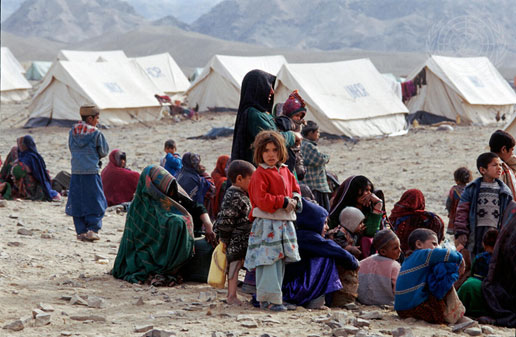 Repeated climate shocks, mounting debt and low employment prospects put greater pressures on families in Afghanistan that were “struggling to get by”. Credit: UN Photo/Luke Powell
UNITED NATIONS, August 11 (IPS) - “Mainly, people tell me they’re exhausted. They’re exhausted from being poor, from being hungry, from repeated climate shocks, mounting debt, and the daily struggle to provide for their families,” Olga Cherevko, Spokesperson for the UN Office for the Coordination of Humanitarian Affairs (OCHA) in Afghanistan, told UN reporters on August 4.
Traveling across Afghanistan, from Bamyan and Herat, Paktia, Khost, and most recently Nuristan after the devastating flash floods, Ms. Cherevko describes a country hit by multiple overlapping crises. These crises have created a humanitarian crisis in which food insecurity, disasters, displacement, and dwindling aid have converged.
Last week, Nuristan was hit by devastating flash floods where families lost loved ones, livelihoods, everything they owned, along with homes and infrastructure. Humanitarians moved quickly to deliver food, water, shelter, healthcare, protection, and psychosocial support; however, “when these floods hit, many people were already struggling to get by,” Ms. Cherevko said. Afghanistan is extremely vulnerable to climate shocks. “Communities barely have time to recover from one disaster when another one strikes…each shock pushes already vulnerable families deeper into poverty.
To help combat the compounding humanitarian crisis in Afghanistan, the 2026 humanitarian needs and response plan requested USD 1.71 billion to provide assistance to 17.5 million people in districts and communities facing the most acute and life-threatening conditions. However, the appeal has received only 26 percent of the required funding, creating a “very alarming” situation, “given the fact that we are seeing a lot of these indicators worsening, particularly malnutrition,” Ms. Cherevko warned. Afghanistan is encountering alarming rates of malnutrition, with OCHA’s nutrition partners noting that childhood wasting has worsened this year across three-quarters of the country.
These figures echo an alert from the World Food Programme (WFP) released last Tuesday. Nearly 14 million Afghans are facing acute hunger. However, funding cuts have resulted in only one in nine receiving WFP food assistance. Furthermore, 3.7 million children and 1.2 million pregnant and breastfeeding women are projected to be malnourished this year. In order to address the acute food needs across Afghanistan, WFP requires USD 900 million for emergency food assistance and nutrition programmes in 2026.
“We have not met needs in the first six months because we didn’t have money,” said John Aylieff, WFP Country Director for Afghanistan. “WFP still needs $500 million to address the acute food needs in the country.”
On top of the hunger crisis, restrictions on girls and women have compounded the humanitarian situation in Afghanistan. These restrictions shape “almost every aspect of daily life” and “with every new restriction, women are pushed even further out of public life…when people become invisible, they risk becoming dispensable,” said Ms. Cherevko. When humanitarian workers cannot reach girls and women and when women cannot work, or girls cannot go to school, “the consequences extend far beyond individuals,” Cherevko added, and that these consequences ultimately affect “the country’s ability to recover.”
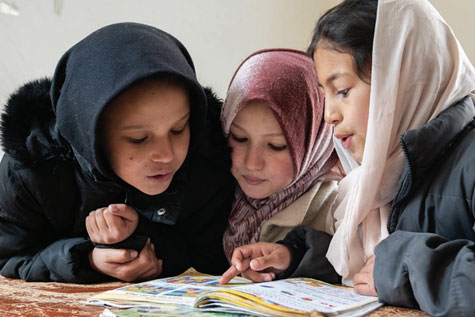 The restrictions placed on women and girls also add a layer of complications for humanitarian workers to even reach those in need. Credit: UNHCR/Oxygen Empire Media
Violence and displacement further add to the crises. Since 2023, approximately 6 million Afghans have been forcibly expelled from neighboring countries like Pakistan and Iran. The returnees have increased the strain on Afghanistan’s fragile economy, and for the returnees, there are “simply not enough jobs to sustain them”, Mr. Aylieff said.
Ms. Cherevko emphasized how many of the returnees are “coming into a country that is completely new for them”, where there are also limited prospects for work. UNHCR estimates that almost 3.1 million Afghan refugees require international protection across the sub-region. For 2026, UNHCR has requested just over USD 450 million for its Afghanistan situation funding; however, similar to OCHA’s and the WFP’s appeals, funding is far from being met.
Despite the emphasis on the need for continued and increased funding, Ms. Cherevko stressed that “humanitarian assistance alone cannot resolve these challenges”. She called for investment in medium- and long-term solutions centering on jobs, education and poverty reduction, in addition to emergency humanitarian assistance. Having worked in Afghanistan for years, Ms. Cherevko has seen the Afghan people show “extraordinary resilience through endless hardship”. Yet, she noted that“resilience should never become a substitute for opportunity or an excuse for the world just to watch and expect people to endure indefinitely without the support they need”.
IPS UN Bureau Report
© Inter Press Service (20260811064903) — All Rights Reserved. Original source: Inter Press Service